

Attracting funding is a crucial step in the growth journey of any business. However, securing equity investment or debt financing can be a challenging task, especially for small and medium-sized enterprises (SMEs). To unlock capital, businesses must demonstrate to funders that they have a well-structured and sustainable model that can generate returns on investment.
This article presents key factors that make a business attractive to funders with a practical application guide/ example of a supermarket chain. By focusing on these factors, SMEs can demonstrate to funders that they have a well-structured and sustainable business model that can generate returns on investment.
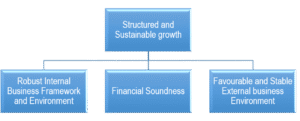
- Robust internal business framework and environment:
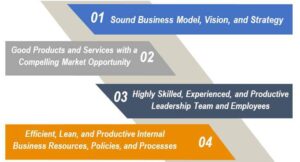
1.1 A Sound Business Model, Vision, and Strategy, clearly documented is essential for attracting funders. This plan should outline the company’s vision, mission, and strategy for growth demonstrating a company’s potential for growth and returns on investment.
Guidance to SMEs: Develop a comprehensive business plan that outlines specific goals, objectives, and timelines. For example, a supermarket chain might aim to increase revenue by 20% within the next 24 months by opening a new store in another city.
1.2 Good Products and Services with a Compelling Market Opportunity: A business with a unique and innovative product or service that addresses a gap in the market is more likely to attract funding as it reduces the risk for funders.
Guidance to SMEs: A supermarket chain might identify a gap in the market for fast-moving consumer goods in a residential location with hardly any strong competitors and open a new outlet in this location.
1.3 Highly Skilled, Experienced, and Productive Leadership Team and Employees: A business with a strong leadership team demonstrates a company’s ability to deliver on its promises and achieve its goals. Skilled and experienced employees are better equipped to execute the business plan and achieve growth.
Guidance to SMEs: A supermarket might invest in ongoing training and development for its staff, ensuring that they have the skills and knowledge needed to provide high-quality service to customers.
1.4 Efficient, Lean, and Productive Internal Business Resources, Policies, and Processes: A business with efficient internal processes and policies can operate effectively and achieve growth without unnecessary costs or risks. This demonstrates a company’s ability to manage resources effectively and minimize risk.
Guidance to SMEs: A supermarket chain might implement a comprehensive system with point-of-sale technology to streamline the payment and checkout process while integrating with inventory and sales management.
- Sound Financial Performance:
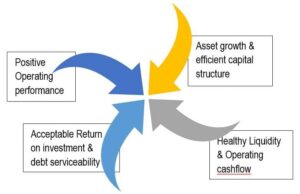
Funders want to invest in businesses with a strong financial track record, including sales growth, profitability, and a solvent financial position. Such businesses demonstrate ability to manage funds effectively and generate returns on investment.
Key aspects of financial soundness include;
2.1 Positive Operating performance and Acceptable Return on investment & debt serviceability:
Growth in sales and optimizing costs to attain profitability over the years thus providing a return on shareholders’ investment
2.2 Asset growth & efficient capital structure:
Re-investing part of the profits into the business to aid asset acquisition, business expansion and reduction in company obligations (liabilities)
2.3 Healthy Liquidity & Operating cashflow:
Sufficient liquidity position to ensure availability of cash to run the business while investing appropriately.
3. A Conducive and Enabling External Environment:
A business that operates in a favorable external environment can provide opportunities for growth and reduce risks for funders.
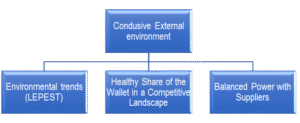
3.1 Key External environment trends (LEPEST) include legal, economic, political, environmental, social, and technological trends.
Guidance to SMEs: A supermarket chain might monitor the following aspects;
- Legal: Adhere to employment laws, health and safety regulations and data protection
- Economic: Manage pricing strategies and supply chain costs to enhance profitability
- Political: Take advantage of government incentives for small businesses through compliance with food safety regulations and employment laws.
- Environmental: Invest in sustainable practices to reduce its environmental impact
- Social: Cater to a wide array of consumers by supplying health-conscious products or demographic-specific products
- Technological: Invest in a comprehensive system with point of sale technology to streamline the payment and checkout process while integrating with inventory and sales management.
3.2 Healthy Share of the Wallet in a Competitive Landscape:
A business with a strong market position and a good understanding of its competitors can compete effectively and generate revenue thus retain an upper hand in the market.
Guidance to SMES: A supermarket chain might focus on building strong relationships with its clients, offering loyalty programs, and investing in targeted marketing campaigns to attract new customers.
3.3 Balanced Power with Suppliers:
A business with balanced power with its suppliers can negotiate favorable terms and reduce costs, demonstrating ability to manage costs and minimize risks.
Guidance to SMEs: A supermarket chain might negotiate with suppliers to secure better prices for products or services, as well as prequalify alternative suppliers to ensure competitive pricing.